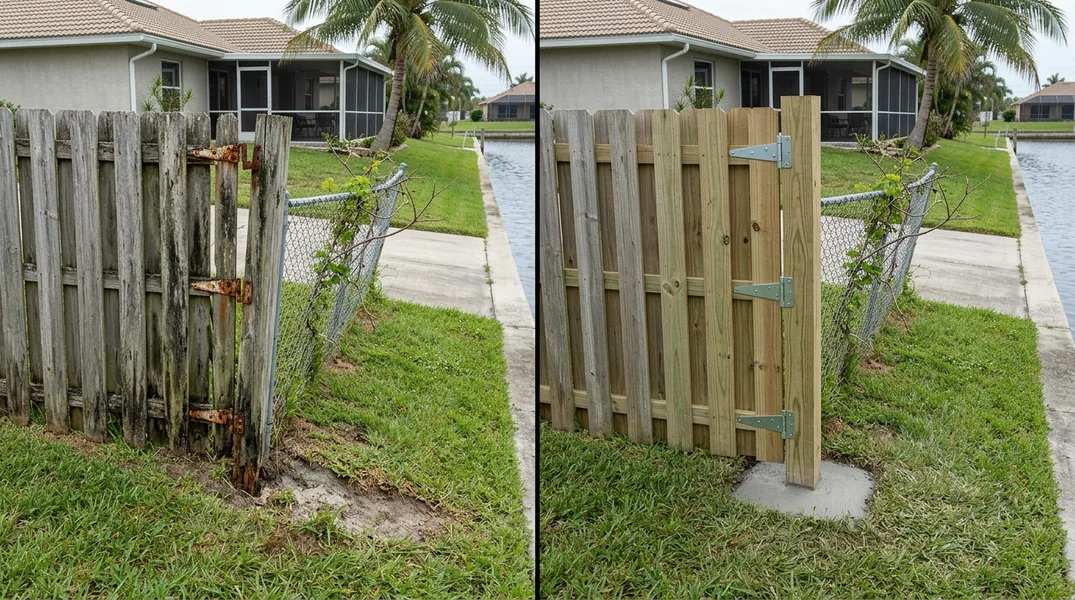
The Perfect Storm: Why Cape Coral Fences Fail
If you've noticed your fence leaning, sagging, or showing signs of decay, you're not alone. Cape Coral homeowners face a unique set of challenges that accelerate fence deterioration faster than in most other parts of Florida. The combination of sandy soil, corrosive salt air, and intense sun exposure creates an environment where even well-built fences struggle to maintain their integrity over time.
The root cause of most leaning fences in Cape Coral comes down to what lies beneath the surface. The region's sandy soil lacks the density and stability needed to anchor fence posts securely. Unlike clay or loamy soil found in other regions, sand shifts and settles unevenly, especially after heavy rains or irrigation. This movement causes posts to shift out of plumb, creating that telltale lean that worsens over months and years. When combined with the corrosive effects of salt air drifting in from the Gulf, wooden posts deteriorate from the inside out, weakening their structural integrity long before visible damage appears.
How Salt Air and Sandy Soil Damage Fence Posts
The salt-laden air in Cape Coral is one of the most aggressive forces working against your fence. Salt particles carried on coastal breezes settle on wood surfaces and penetrate into the grain, accelerating rot and decay. This process is particularly destructive below the soil line, where moisture combines with salt to create a corrosive environment that eats away at the post's structural core. Many homeowners don't realize the damage is occurring until the post has already lost significant strength, making a leaning fence repair more urgent than they anticipated.
Sandy soil compounds this problem by failing to provide adequate support and drainage. When water accumulates around a fence post in sandy soil, it doesn't drain efficiently. Instead, it lingers, keeping the wood perpetually damp and creating ideal conditions for fungal growth and wood rot. The sand also offers minimal lateral support, meaning posts can shift more easily when hit by wind, vibration from nearby traffic, or even the weight of vines and ivy growing on the fence. Over time, this combination of poor drainage, salt corrosion, and weak lateral support causes posts to lean noticeably, threatening the stability of the entire fence structure.
Signs Your Fence Needs Post Repair or Replacement
Recognizing the early warning signs of post failure can save you money and prevent a complete fence collapse. The most obvious indicator is a visible lean, but this is often a late-stage symptom. Before your fence starts leaning dramatically, watch for softer, spongier wood when you press on the post with your thumb, discoloration or dark staining that indicates rot, or a hollow sound when you tap on the post with a hammer. These signs suggest that wood and privacy fence installation professionals should inspect your fence immediately.
Another critical indicator is movement or wobbling when you push on the fence. If the fence shifts or feels unstable when you apply moderate pressure, one or more posts have likely lost structural integrity. Cracks radiating from the base of the post, separation between the post and the fence panels, and insect damage (termites and carpenter ants are common in coastal Florida) are also red flags. The sooner you address these issues, the more likely you can salvage the fence with targeted fence post repair rather than complete replacement. Waiting too long often means the damage spreads to neighboring posts and panels, turning a simple repair into an expensive full-section restoration.
Leaning Fence Repair: Solutions That Work in Cape Coral's Climate
When a fence post begins to lean, you have several repair options depending on the severity of the damage and the post's remaining structural integrity. For posts that are still sound but have shifted due to sandy soil settling, realignment is possible. This involves carefully straightening the post using hydraulic jacks and bracing, then re-securing the foundation. In some cases, adding concrete around the base of the post or installing steel reinforcement can restore stability without requiring full post replacement. However, this approach works best when the wood itself is still healthy and the lean is relatively minor.
For posts showing signs of rot, decay, or significant corrosion, fence post replacement is the more reliable long-term solution. Modern post repair techniques involve removing the damaged section and splicing in new pressure-treated lumber or installing a reinforced post sleeve. In Cape Coral's harsh coastal environment, using pressure-treated wood rated for ground contact and marine exposure is essential. Some homeowners also consider upgrading to vinyl or composite materials during repairs, as these alternatives resist salt air and moisture far better than traditional wood. If you're considering alternatives to wood, vinyl and PVC fence installation offers excellent durability in coastal conditions and requires minimal maintenance.
Preventing Corroded Fence Posts: Maintenance and Best Practices
The best defense against corroded fence posts is preventive maintenance. Regular inspection of your fence, especially the posts and the soil around them, can catch problems before they become serious. After heavy rains, check that water isn't pooling around the base of posts. If it is, improve drainage by regrading the soil or installing a gravel bed to promote water runoff. Apply a quality wood sealant or stain every two to three years to protect against salt spray and UV damage. This simple step can dramatically extend the life of wooden fence posts in Cape Coral's aggressive climate.
Consider installing metal post caps or sleeves to shield the tops of posts from water penetration. Water that enters the post from above accelerates internal rot, so keeping the tops dry is crucial. If you live close to the coast or in an area with direct salt spray exposure, rinse your fence with fresh water periodically to remove accumulated salt residue. Additionally, ensure that your fence has adequate ventilation and isn't blocked by dense vegetation that traps moisture. If your fence is showing multiple problem posts or has reached the end of its service life, consulting with professionals about your repair options is wise. Cape Coral Fence Company can assess your specific situation and recommend whether targeted repairs or a complete fence replacement makes the most sense for your property.
When to Call a Professional for Fence Post Repair Near Me
While some minor fence maintenance is within the reach of handy homeowners, fence post repair and replacement require specialized knowledge and equipment. Improperly installed posts will fail again quickly, especially in Cape Coral's challenging environment. A professional contractor understands local soil conditions, knows which materials hold up best against salt air, and has the tools to safely remove and install posts without damaging adjacent panels or creating new problems. They can also identify structural issues that aren't immediately obvious to the untrained eye.
If you're dealing with a leaning fence, corroded posts, or instability in your fence structure, don't wait for the problem to worsen. Contact Cape Coral Fence Company at (239) 323-1805 to schedule a free estimate. Our team has extensive experience with fence post repair and replacement throughout Cape Coral and understands the unique challenges posed by sandy soil and salt air. We'll inspect your fence thoroughly, explain your options, and provide honest recommendations based on what will serve your property best. Whether you need targeted repairs to extend your current fence's life or are ready to invest in a new installation with better materials, we're here to help you make the right decision.
Looking for a professional fence contractor in Cape Coral? Cape Coral Fence Company responds fast for all your fence needs.
Get a Free Quote