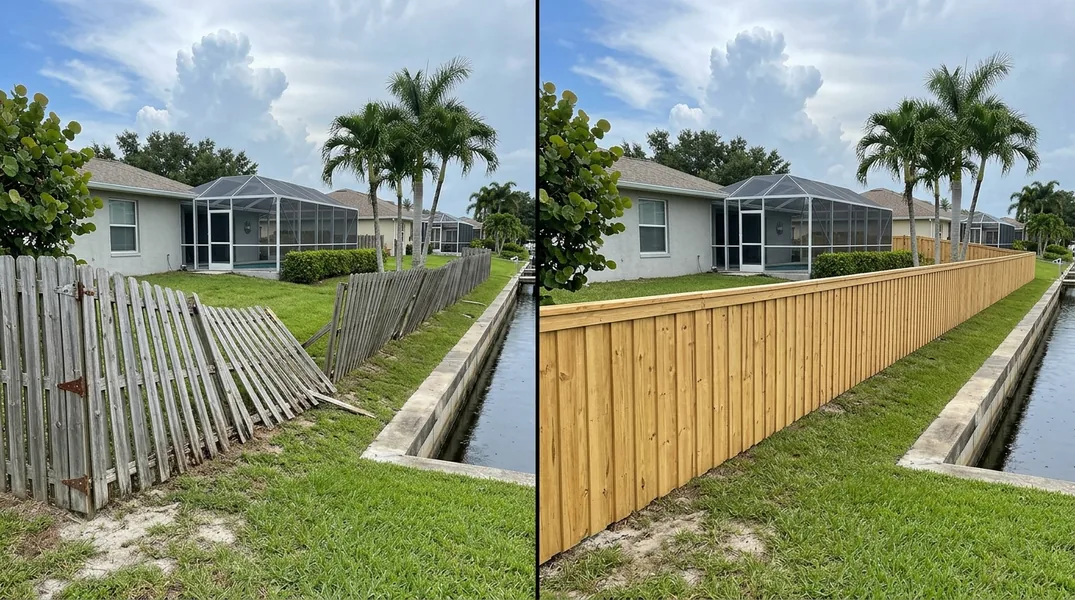
How Long Does a Wood Fence Really Last in Cape Coral?
If you're considering Wood & Privacy Fence Installation for your home in Cape Coral, one of the first questions you'll ask is simple: how long will it actually last? The honest answer depends heavily on where you live. In most inland parts of Florida, a well-maintained wood fence can last 10 to 15 years. But in Cape Coral, where the salt air from the Gulf of Mexico is a constant presence, that timeline shrinks considerably. Most homeowners in our area can expect a wood fence to remain in good condition for roughly 5 to 10 years, with some fences deteriorating faster depending on maintenance and wood type.
The difference comes down to salt spray and humidity. Cape Coral sits in a coastal environment where sodium chloride particles travel through the air and settle on everything, including your fence. These tiny salt crystals accelerate wood decay, promote rust on metal fasteners, and create an environment where mold and mildew thrive. A fence that might last 12 years in inland Florida can fail in half that time when exposed to relentless salt air. Understanding this reality helps you make informed decisions about material selection, maintenance schedules, and when to plan for replacement.
What Fails First: The Anatomy of Salt Air Fence Corrosion
When salt air begins its work on a wood fence, it doesn't attack everything at once. There's a predictable order in which components fail, and knowing this sequence helps you catch problems early. The first casualty is almost always the metal hardware: nails, screws, brackets, and hinges. These fasteners rust rapidly in coastal environments because salt accelerates oxidation. You might notice rusty stains bleeding down your fence boards within the first year or two of installation. This isn't just cosmetic; as the fasteners corrode and weaken, they lose their holding power, and boards begin to shift, warp, and eventually separate from the posts.
The wood itself is the next target. Salt air doesn't rot wood in the traditional sense, but it creates the perfect conditions for rot to flourish. The salt particles damage the wood's protective outer layer, allowing moisture to penetrate more deeply. Combined with the high humidity of coastal Florida, this moisture creates an ideal breeding ground for fungal decay, wood-eating insects, and mold. Typically, the base of your fence posts and the lower portions of fence boards are hit hardest because they're closer to salt spray and tend to retain more moisture. You'll notice discoloration, soft spots that yield to pressure, and a general loss of structural integrity. Finally, if left unaddressed, the posts themselves become compromised, and the entire fence can become unstable or even collapse.
Factors That Speed Up or Slow Down Wood Fence Deterioration
Not all wood fences in Cape Coral fail at the same rate. Several variables influence how quickly your fence will show signs of age and damage. Wood species matters enormously. Pressure-treated pine is the most common and affordable choice, but it's also more vulnerable to salt air damage than naturally rot-resistant species like cedar or redwood. If you want maximum longevity, investing in a higher-quality wood species will pay dividends. Similarly, the thickness and grade of the wood affect durability. Thicker boards and posts resist deterioration longer than thinner ones because there's more material to lose before structural failure occurs.
Maintenance is perhaps the single most important factor you control. A fence that's sealed or stained every two to three years will last significantly longer than one left to weather naturally. Sealant creates a protective barrier that prevents salt spray and moisture from penetrating the wood. Regular cleaning to remove salt deposits, mold, and mildew also extends fence life. Proper drainage around fence posts is critical too; if water pools at the base of posts, rot accelerates dramatically. Finally, your fence's exposure level matters. A fence directly facing the Gulf or in an area with heavy salt spray will fail faster than one sheltered by landscaping or buildings. When you're ready to explore your options, Cape Coral Fence Company can help you select materials and installation methods that maximize longevity in our coastal environment. Call us at (239) 323-1805 to discuss your specific situation.
Wood & Privacy Fence Installation Cost in Cape Coral: What to Budget
When you're planning a new fence installation or replacement, pricing is naturally a major consideration. The cost of Wood & Privacy Fence Installation in Cape Coral varies based on several factors, including the wood species you choose, the height and length of your fence, site conditions, and the complexity of the installation. A pressure-treated pine privacy fence typically costs less per linear foot than cedar or redwood, but remember that it will likely need replacement sooner in our salt air environment. When you factor in maintenance and eventual replacement costs over a 20-year period, a higher-quality wood might actually be more economical.
Labor costs in Cape Coral are competitive, but you should always get multiple quotes to compare. Be wary of prices that seem too good to be true, as they often reflect lower-quality materials or installation shortcuts that will cost you more in repairs and premature replacement. If budget is tight, consider whether Vinyl & PVC Fence Installation might be a better long-term investment. While vinyl has a higher upfront cost, it requires virtually no maintenance and lasts 20 to 30 years even in coastal conditions. Get a free estimate from Cape Coral Fence Company to understand your true options and total cost of ownership for different materials.
Maintenance Tips to Extend Your Wood Fence Lifespan
If you've already invested in a wood fence or are planning to do so, proper maintenance is your best defense against premature failure. Start with a regular inspection schedule. Walk your fence line at least twice a year, looking for rust stains, soft wood, loose boards, or signs of pest damage. Catching problems early means you can address them with minor repairs rather than facing major replacement costs. Clean your fence annually to remove salt deposits, mold, and mildew. A gentle pressure wash (using low pressure to avoid damaging the wood) or a soft brush with a mild detergent solution works well. Rinse thoroughly afterward to remove any cleaning residue.
Sealing and staining are essential in coastal environments. Apply a quality exterior wood sealer or stain every two to three years, depending on how exposed your fence is and how much sun it receives. This creates a protective barrier that prevents moisture and salt from penetrating the wood. Pay special attention to the cut ends of boards and the tops of posts, where wood is most vulnerable. Replace any rusted or corroded fasteners with stainless steel alternatives, which resist corrosion far better than galvanized nails and screws. Finally, ensure proper drainage around fence posts by grading soil away from the base and avoiding situations where water collects. If you're unsure about the best maintenance approach for your specific fence, the team at Cape Coral Fence Company can provide guidance tailored to your installation.
When to Replace Your Fence: Signs It's Time for an Upgrade
Eventually, even the best-maintained wood fence will reach the end of its serviceable life. Knowing when to replace rather than repair saves money and prevents safety issues. If more than 10 to 15 percent of your fence boards are damaged, soft, or rotted, replacement is likely more cost-effective than piecemeal repairs. Similarly, if multiple posts have become unstable or wobbly, the structural integrity of your entire fence is compromised. A leaning fence or one with visible gaps between boards is not only unsightly but potentially dangerous, especially if you have children or pets. Rust stains and discoloration that don't improve with cleaning usually indicate deeper wood damage beneath the surface.
If your fence is approaching 8 to 10 years old and you're in Cape Coral, it's worth having a professional evaluate its condition. This is a good time to consider alternative materials that might better suit our coastal climate. Vinyl & PVC Fence Installation or Aluminum & Ornamental Iron Fencing offer excellent durability in salt air with minimal maintenance. Contact Cape Coral Fence Company at (239) 323-1805 or request a free estimate to explore your replacement options and get a professional assessment of your current fence's remaining life.
Looking for a professional fence contractor in Cape Coral? Cape Coral Fence Company responds fast for all your fence needs.
Get a Free Quote