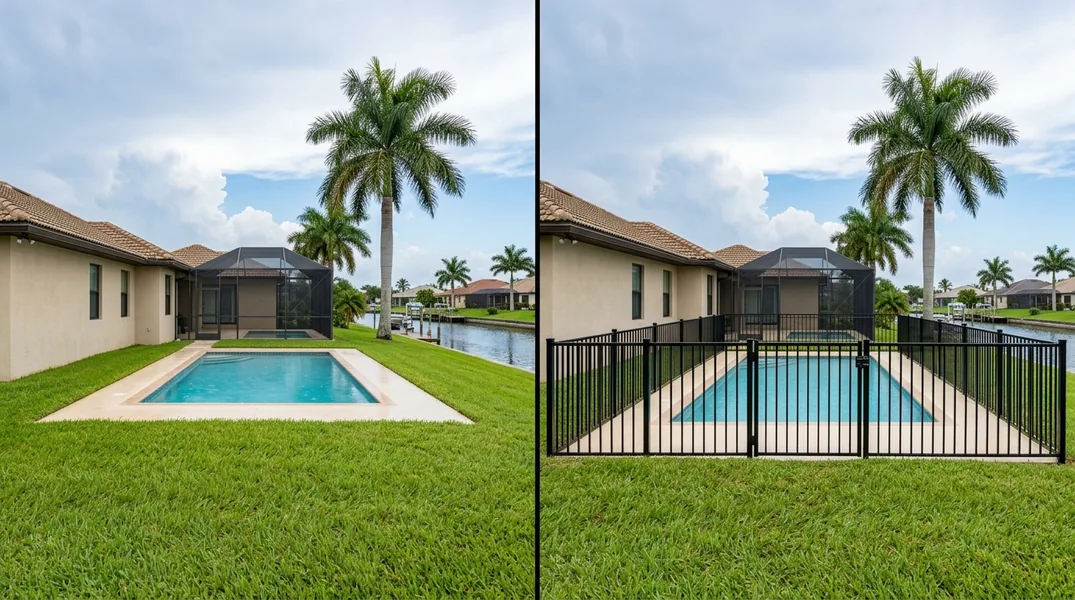
Why Pool Fence Laws Matter in Cape Coral
If you own a swimming pool in Cape Coral, you're not just responsible for maintaining clean water and safe equipment. Florida state law, along with local building codes, requires you to install specific safety barriers around your pool. These regulations exist for one critical reason: to prevent accidental drowning, especially among young children and pets.
Many homeowners assume that a simple fence is enough, but the reality is more nuanced. Florida's pool safety regulations are detailed and specific about dimensions, materials, gate mechanisms, and installation standards. Non-compliance can result in fines, liability issues if an accident occurs, and complications when selling your home. Understanding these requirements before you install or upgrade your pool barrier is essential to protecting your family and your property investment.
Understanding Pool Fence Height Requirements
One of the most fundamental requirements under Florida pool fence code is the height of the barrier itself. Florida law mandates that any pool fence must be at least 4 feet tall, measured from the ground to the top of the fence. This height is measured on the side of the fence that faces away from the pool, which is important because ground slopes and landscaping can affect how high a fence actually stands.
The reasoning behind the 4-foot minimum is straightforward: it's designed to prevent young children from climbing over the barrier. However, height alone isn't the only consideration. The fence must also be constructed so that there are no handholds or footholds that would make climbing easier. This is why Wood & Privacy Fence Installation services in Cape Coral must pay careful attention to spacing, construction materials, and design. Horizontal slats, for example, can create climbing opportunities, so many installers prefer vertical designs for pool barriers.
Self-Closing Pool Gate Requirements and Installation
Perhaps the most critical component of a compliant pool fence is the gate itself. Florida law requires that any gate providing access to the pool area must be self-closing and self-latching. This means the gate must automatically close behind anyone who passes through it and must automatically latch securely without requiring manual action. The gate cannot remain open or require someone to remember to close it; the mechanism must function automatically every single time.
The self-closing mechanism is typically achieved through a spring-loaded hinge system, while the self-latching feature requires a latch that engages without human intervention. Additionally, the latch must be positioned at least 54 inches above the ground, which places it well out of reach of small children. The gate itself must also meet the same 4-foot height requirement as the rest of the fence. If you're considering pool fence installation, whether through Vinyl & PVC Fence Installation or traditional wood fencing, ensuring proper gate installation is non-negotiable for legal compliance.
Spacing and Barrier Openings: What the Code Says
Beyond height and gate mechanisms, Florida pool fence code is very specific about spacing and openings in the fence itself. The regulations state that no opening in the fence can be larger than 4 inches in any direction. This includes gaps between vertical slats, spaces at the bottom of the fence, and any other openings. The logic is the same as with height: preventing small children from squeezing through or under the barrier.
This spacing requirement is why professionally installed fencing is so important. A fence that looks fine to the naked eye might actually have gaps that exceed code requirements. When you hire a reputable fence company for your pool barrier project, they understand these precise measurements and can ensure every section of your fence meets specifications. Even gaps between the fence and the ground matter. If your yard has uneven terrain, you may need additional barriers or adjustments to ensure compliance. This is especially important in Cape Coral, where landscaping and soil conditions can vary significantly from property to property.
Pool Fence Installation Options: Choosing the Right Material
When it comes to meeting Florida's pool fence requirements, you have several material options, each with its own advantages. Wood & Privacy Fence Installation remains a popular choice for pool barriers because wood offers classic aesthetics and can be customized to match your home's style. Wood fences are durable when properly maintained and can easily meet all height and spacing requirements. However, wood requires regular staining or sealing to withstand Florida's humid climate and salt air, especially if you live near coastal areas.
Vinyl & PVC Fence Installation has gained popularity in recent years, particularly in Florida. Vinyl is low-maintenance, resistant to rot and insects, and holds up extremely well in humid and salty environments. It's an excellent choice for pool barriers because it won't splinter, requires minimal upkeep, and maintains its appearance for years. Chain Link Fence Installation is another budget-friendly option that meets code requirements, though it offers less privacy. Aluminum & Ornamental Iron Fencing provides a decorative option that combines safety compliance with aesthetic appeal. Regardless of which material you choose, the most important factor is working with experienced installers who understand local codes and can ensure proper installation.
Getting Your Pool Fence Installation Right: Next Steps
If you're planning to install a new pool fence or upgrade an existing one in Cape Coral, the best first step is to consult with professionals who specialize in pool barrier installation. Cape Coral Fence Company understands Florida's specific pool fence code requirements and has installed countless compliant barriers for homeowners throughout the area. Rather than guessing about measurements, materials, and gate mechanisms, you can rely on experts who know exactly what local inspectors require.
The cost of pool fence installation varies based on materials, fence length, and site conditions, so it's worth getting a detailed pricing breakdown from a qualified contractor. Many companies, including Cape Coral Fence Company, offer free estimate consultations where they can assess your property, discuss your options, and provide transparent quotes. You can reach Cape Coral Fence Company at (239) 323-1805 to schedule your consultation today. Investing in a properly installed, code-compliant pool fence protects your family, ensures legal compliance, and provides peace of mind knowing your pool area meets all safety requirements.
Looking for a professional fence contractor in Cape Coral? Cape Coral Fence Company responds fast for all your fence needs.
Get a Free Quote